A Different Grape

I don’t know much about my mother’s early twenties in Los Angeles. From photographs, I know she favored mauve nail polish and owned a leopard print one-piece. She’s told me about the car prone to breaking down in West Hollywood and her job at a large news station. She dated a man named Ed.
+
I was sixteen when my mother befriended a dental receptionist. She didn’t like the woman very much, but we had just moved from California to Washington state, so my mother said yes when the receptionist invited our family to a horse race. Her son was around my age and, sweating next to me in the stands, asked if I wanted to meet his best friend, Nick.
+
My mother met Ed at work. Green eyes, she says every time we talk about him, as if I’ve forgotten.
+
Nick and I went for ice cream. We were more engaged with the frost-encrusted freezer than each other, and I left quickly. He ran after me through the parking lot. Nausea and not excitement bloomed in my gut as I registered his heavy footfalls behind me.
I am my mother’s daughter, so I said yes when he invited me to the homecoming dance.
+
I don’t know if Ed actually asked her out in an elevator or if I just imagine it this way: My mother, about 5’6”, brown hair falling around her freckled face; Ed behind her, taller, those green eyes.
+
The morning after the dance—sweaty, unremarkable, the elastic band of my corsage digging into my wrist—I overheard my mother on the phone with the receptionist she didn’t like. I crept in socked feet to the doorframe of my father’s office, where she sat in his leather chair, face backlit by the feeble morning light. She hung up and said I would probably hear from Nick soon.
+
Grandma didn’t approve of Ed, my mother tells me. Perhaps it was his age, a decade past her tender 22, or the way he approached all women the same, even the mother of his girlfriend. Those green eyes.
But Mom lived in L.A., Grandma in Irvine. There was nothing to be done.
+
Before opening night of the school musical in which I was cast as lead dancer, Nick surprised me with a bouquet of tulips. Afterward, I drove to his house, and we sat next to each other on the piano bench as he played songs he’d taught himself.
His youngest brother passed by on his way upstairs. Nick grabbed the boy by his ankles, and held him upside down as he tickled him to tears.
There was nothing to be done.
+
Ed had a father, a mother, and sisters. Our men, the sisters told my mother, can’t control themselves.
+
Nick’s mom was engaged to Nick’s dad when her father said something like: You don’t have to go through with this if you don’t want to. She left.
Custody decisions were amicably reached. Nick’s dad befriended the man she married instead, even stayed long weekends in their guestroom.
Nick is like his dad, my own father once told me. He’ll never let you go.
+
How my father tells the story of first meeting my mother: He ate lunch at her table in the station’s cafeteria and tried to make her laugh. She didn’t.
How my mother tells it: She was preoccupied with wrestling herself away from Ed.
It took a year and a therapist. She omits the details, so I imagine her detaching a leech from her arm, the part where humerus meets radius and ulna. A deep sucking and a sharp pop.
+
I dated two people before Nick. When I try to remember them, their outlines splinter into inhuman shapes that don’t resemble the boys I knew but instead failed barriers keeping Nick from me.
Once, the first of the two got just inches from my face and held himself there, waiting.
+
My father affectionately cites my mother’s thoughtless habits—sprinkling bleach in the sink and forgetting to scrub it out, leaving apples on the cutting board with a knife stuck mid-slice.
As a child, I watched from the car’s backseat as he chastised her for applying lipstick while driving. The tube was silver, concentric rings running up its length. It turned my mother’s mouth from soft rosebud to a startling and unfamiliar magenta.
+
Nick went in to kiss me on my front stoop. I’d forgotten my keys so immediately rang the doorbell, hoping the impending presence of someone else would deter him.
Instead, my mother opened the door to find Nick with his mouth on mine.
This—and being chased through a parking lot—are the only signs I can identify warning me of what was to come. Who stood with me on that stoop.
+
She told me Ed once threw her car keys behind the stove. It was a fight, a bad one, in the kitchen, perhaps a dormant kettle on the left burner, its convex steel surface reflecting a man yelling at a woman about how he didn’t want her to leave before throwing her keys behind the stove.
+
Nick drove me home after a fight, a bad one, and our voices strained against the windows until I screamed, Let me out! He pulled over, and turned to look at me, perhaps pressing the child lock switch, perhaps not. Either way, I couldn’t leave.
+
The second time my mother met my father, they were at a bar celebrating the station’s high ratings. She didn’t remember meeting him the first time, and he had no expectations when he said hello in line for a drink.
They sat on the bar’s back steps with glasses of water, talking until morning.
+
My father encouraged me to break up with Nick before college. I don’t remember his exact words, but I would like to imagine he said something like: You don’t have to go through with this if you don’t want to.
Nick’s mom gave me a Tiffany necklace for graduation. We stayed together.
+
A few months later, over Christmas break, Nick and I went to a grocery store. I bought a carton of raspberries. He asked if I wanted to see his new college house.
+
The insistent push of seeds between my teeth. I sat on his bed. He was cold, he said, and lay down next to me.
+
My memory is a weak radio signal, or perhaps the muffled bleating of a doorbell. Nick’s hands were everywhere. Imagine a leech on your arm where humerus meets radius and ulna. A deep sucking and sharp pop.
+
Finally, somehow, I ran. When I reached the living room, I remembered he drove me there. That the house was empty. When he followed me, which he did, he took the stairs one at a time.
Perhaps I begged, perhaps not. Either way, I couldn’t leave.
+
For months after, he would text me: What color underwear are you wearing? I would stare at the closest wall, recalling the pork chops his roommate cooked us for dinner once. The meat was still pink in the middle, but I ate it anyway, visualizing stomach worms—long, white, unfurling.
I think about it, he would say when I didn’t answer, and you know what I do.
+
Nearly a year later, he left a letter on my doorstep in the middle of the night—handwritten, frantic, with page numbers. I stopped telling our mutual friends where I was, delisted my location across social media. Perhaps when I’m my mother’s age, I won’t feel as if he’s standing behind me whenever I ride an elevator.
+
When my mother first told me the story of Ed, it didn’t go how I just told it: He was a difficult man she loved when she was young, the proverbial dodged bullet, before meeting my father. The keys behind the stove, Ed’s sisters, Grandma’s disapproval, were all details I gathered as an adult and pieced into my own narrative of my mother’s abuse that she, at least out loud, does not acknowledge as her own.
I wonder what questions the therapist helping my mother leave Ed asked of her then. How did she answer? How did she tell this story when she was a girl, as I was?
And how will I answer my own daughter when she inevitably asks?
+
My mother didn’t know much about my early twenties in New York. From photographs, she knew my nails were either bare or red depending on how much money I had after rent. I told her I was prone to fainting during my commute from Brooklyn, my job for most of the decade spent soothing temperamental bosses at large publishing houses. Still, I felt safe, knowing I lived an entire country away from Nick, whoever he became.
By 33—married, more gainfully employed, armed with an array of snacks to ward off perpetually low blood sugar—I often wear lipstick. My favorite color is called A Different Grape. The tube is silver, concentric rings running up its length. My mother likes it on me as, after all, she wore it first for years. In fact, she bought it before I was born, when Ed requested she wear more adult makeup.
I swipe the startling magenta across my mouth and ask my mother where Ed is now. She says he’s probably dead.
Related Articles

In Pictures
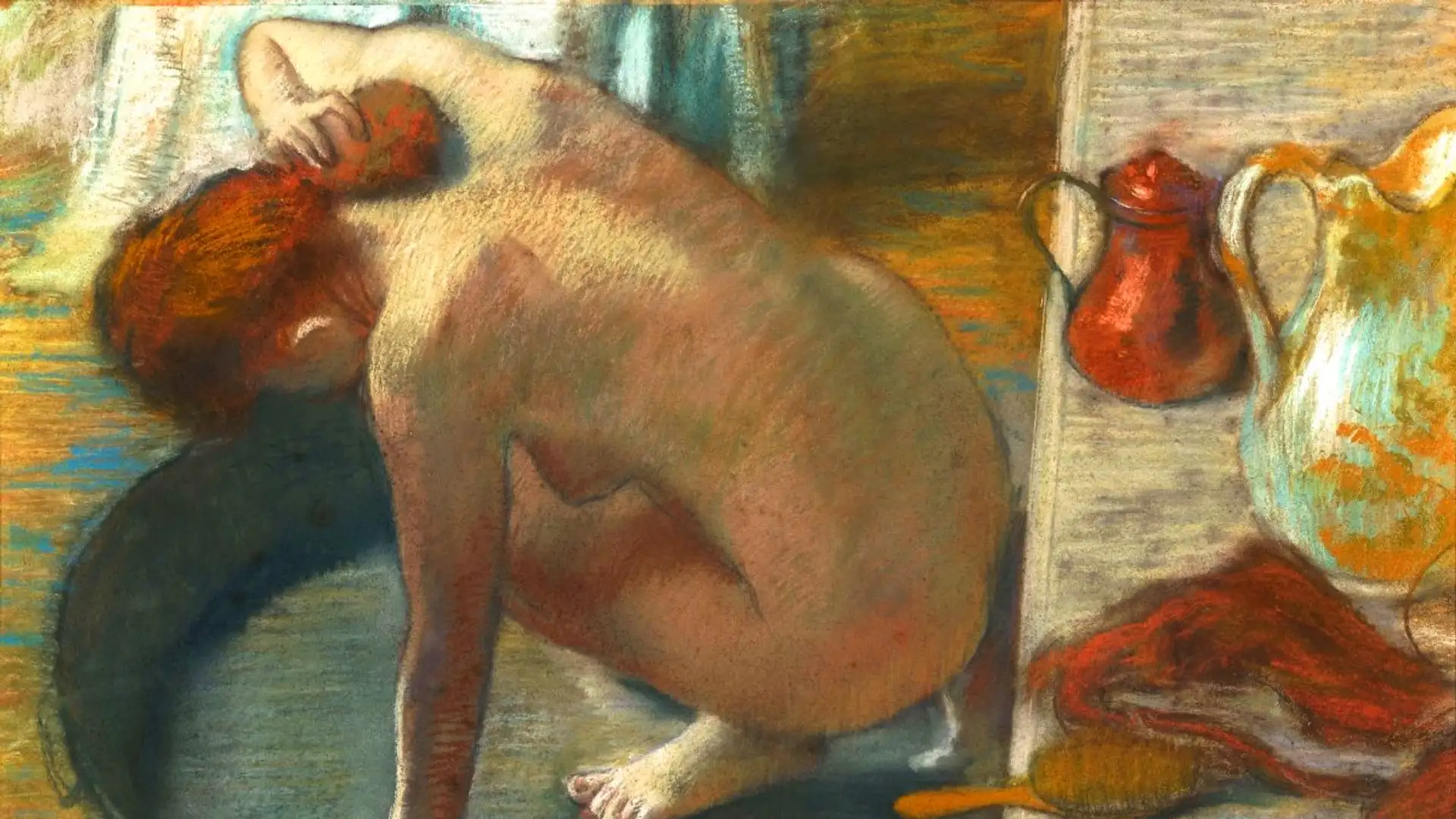
Why Bathing Is More Than Self-Care—It’s Art
To be female and to bathe is to always be prepared for onlookers.