On Criticism, Justin Bieber, and the Temptation to Review Everything (Including Ourselves)
A Reflection from In Review’s Founding Editor

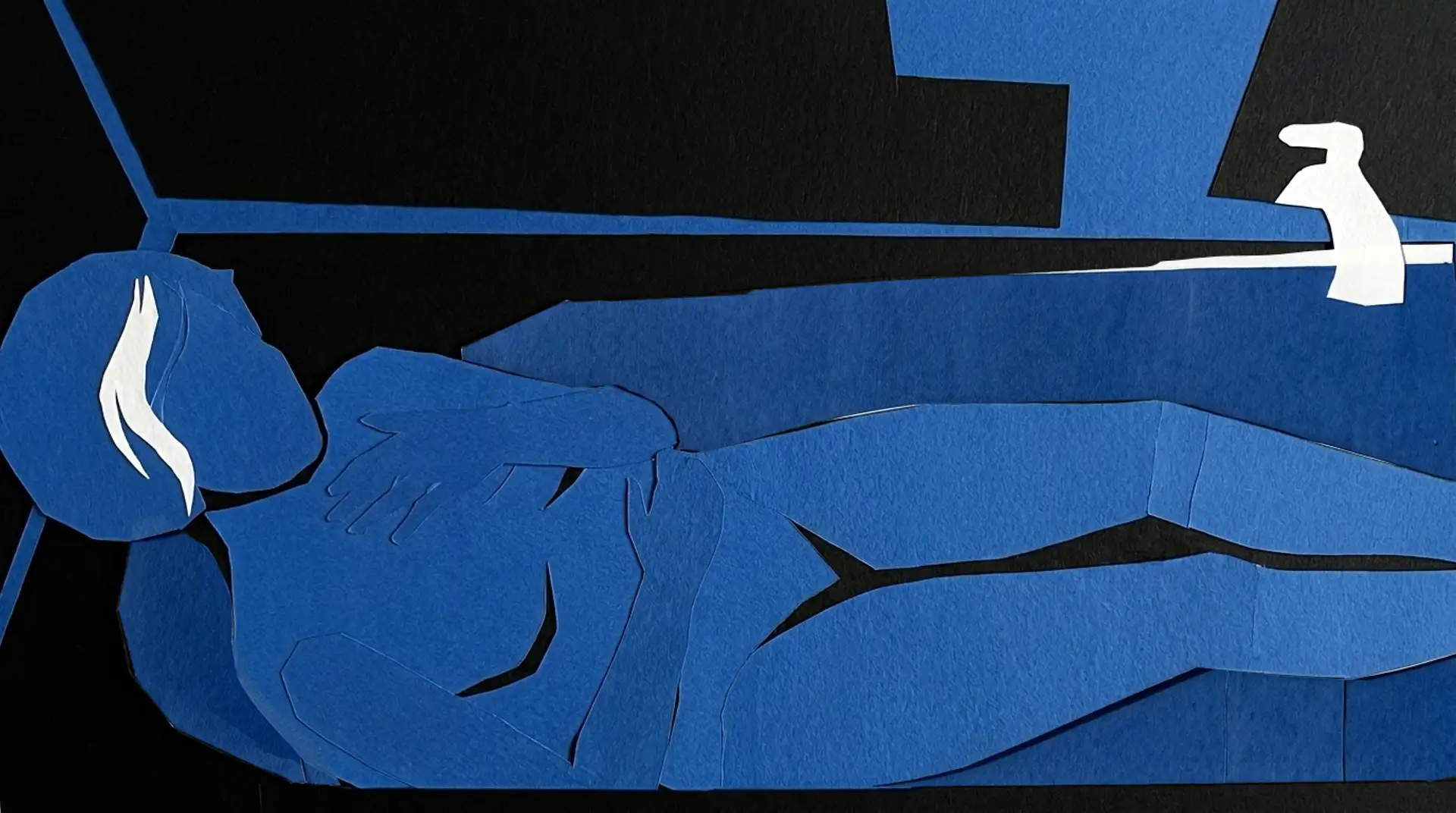
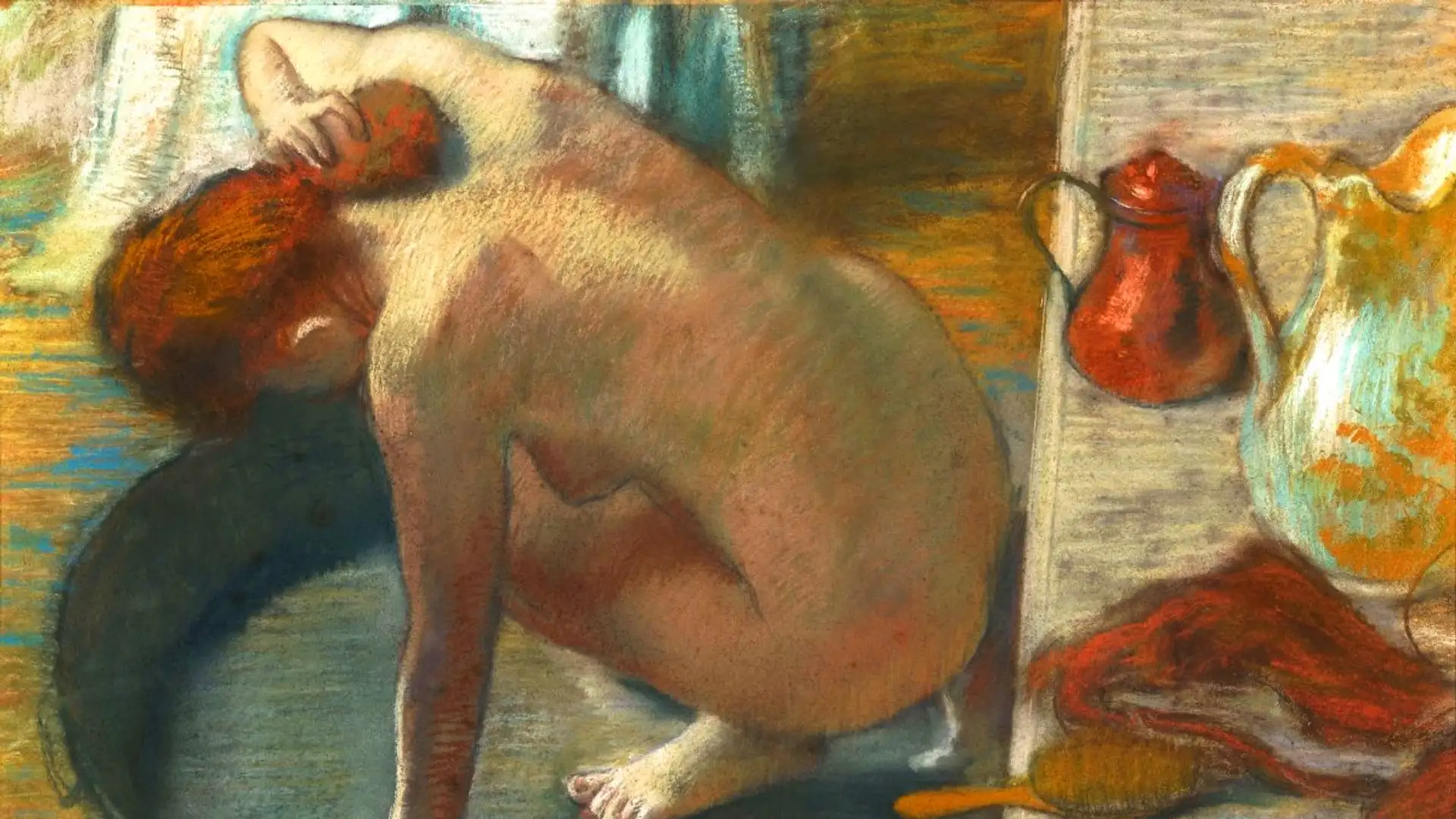
My first critical essay, “On Bathing,” was published in the now-defunct Catapult Magazine in August 2020. Ostensibly, a look at how bathing is more than self-care, it’s a form of art, as told through photographs of Susan Sontag in the tub taken by Annie Leibovitz. The piece is really about our ability to intuit ourselves, and the distance between an outside witness and our own point of view. A shift in perspective is necessary in a genre like memoir, a form that requires writers to render our own image again and again, merging our present with past selves on the page. Writers and artists alike share this innate curiosity to look back at a version of our past.
Just as Sontag’s work has influenced my sensibilities as a writer—my preferences for the long-form essay, fusing high with lowbrow cultural critiques and human insight—“On Bathing” was instrumental in the start of my career. A byline that led to other career-making milestones like a contract to write my first column, representation from my literary agent, opportunities to forge relationships with professional editors.
Even so, the thought of revisiting a piece of such significance is as meaningful as it is anxiety-inducing.
Normally, I shy away from rereading previously published work of my own. The thought of rereading this essay educes an ache from the deep pit of my stomach. Similar to the way I cringe when listening to the playback of a voice memo or recording of me moderating a focus group or interview, the sounds of my own voice and all its meandering are almost too much to bear. Transcription is like self-flagellation: Why didn’t I phrase a question differently? Transition from topics more eloquently? Follow another line of inquiry? It’s impossible to look back without noticing every little imperfection. And unlike in early drafts, in rereading published writing, I must accept that I cannot make changes.
In a recent interview with the New Yorker, László Krasznahorkai confessed that he’s not a reader of his own books: “I would never voluntarily reread any of them,” he said. Then, described how when forced to reread, he’s faced with the inevitable flaws (“error of rhythm, of melody, of content, a flaw in form”) in his prose. Each new novel emerges as a response to the previous; the next book an opportunity to reconcile past mistakes. “My entire life is just such an attempt at recompense. I am not doing well.”
For the Nobel laureate, what’s considered failure is also the engine inside his writing practice, driving him and his work forward. For others, the past can be a nail in the front tire that leaves us stuck, stranded on the side of the road.
It’s easy to become consumed by the past. Too easy. Who of us hasn’t ruminated a bit too long over something we’ve said, a text we shouldn’t have sent?
Raymond Carver famously revised and republished his short stories after it was revealed the substantial role his editor Gordon Lish played in crafting what became known as Carver’s distinct conversational voice; style rooted in realism and sparse (if any) description. When noticeably longer revised or “restored” versions of existing popular pieces were released, the public was split. Was Carver revising merely out of spite? To reject a reputation because it was one built on collaboration? Or did his success grant him permission to go back and reclaim stories in their entirety?
Whatever the reason, I’m not sure it matters. Instead of dedicating himself to new projects, Carver spent his final years revising previously published work.
I may not entirely relate, but I understand this impulse. The urgency one feels when viewing our work through the public eye, and we spot a comma out of place or suddenly wish to amend a resting image. Like a blemish that needs concealer, a loose thread we desperately wish to tug, in the hopes that if we do, we can change what everyone has already seen.
This holds true in my reread of, “On Bathing” six years later. Immediately, language choices began to gnaw at me for various reasons. The wish to walk back the verb ‘slosh;’ to omit a comparison of bath water to “amniotic-like fluid”—a heavy-handed gesture toward a narrator gestating only to be reborn. Tub as womb, an effective metaphor. But is it necessary? And we’re not even past the opening graph.
It’s easy to become fixated. Too easy.
When we open ourselves up to revisiting our past, we’re able to evolve. But it takes courage to be curious about ourselves.
But not every writer or artist has this hang up. There are many creative people who return to their past work with compassion for who they were in that moment, proud of what they were able to create then.
Yo-Yo Ma has recorded Bach’s Cello Suites three distinct times: in his 20s, 40s, and 60s. Rather than simply viewing it as repeating history, Ma, in an interview with Terry Gross, said that he considers each performance as returning to the same stream of water, a river he first stepped in as a child prodigy at four years old. What’s difficult or beautiful about the piece changes over time. “You know what it is about a river? It's never the same river, but you always call it the same river, but the water's never the same.”
Vivian Gornick embarked on a similar quest in her book, Unfinished Business: Notes of a Chronic Re-Reader, where she sets out to reread books that influenced her in some way, and write about what she discovers in the process. What does she find? That not only had her reading experience with texts from writers like Elizabeth Bowen, Natalia Ginzburg, and Marguerite Duras changed over time, but so had she. Insight into intimate relationships, marriage, and domesticity that were once lost upon Gornick as a young girl now appeared as revelations that popped off the page as an adult reader who had married, divorced, and knew what it meant to endure through both over the years.
When we open ourselves up to revisiting our work, ideas, opinions of the past from a place of curiosity, we’re able to evolve. But it takes courage to be curious about ourselves.
In my reread of “On Bathing,” the memoir strand of that braided essay—the version of myself from that time—is what I’m most afraid to revisit. A narrator on hiatus from her day job moderating focus groups for big beauty brands, who is chronically ill and spends her days in the bath obsessing over other women who, like her, are sick and in the tub.
What’s changed? On the surface, I’m still very much that woman. Perhaps even more so. There is less stillness. Less time spent soaking, more hours devoted to moderating more groups to save for another illness-related surgery.
If I were to write that same essay today, my tone would be less meditative, more pointed. Less fearful of the unknowns surrounding the Pandemic, more infuriated by the decimation of civil liberties, reproductive rights, and access to affordable healthcare. Instead of looking for hidden symbols of resilience coded in the pictures of Sontag in the bathtub (her posture, hands, how she holds her scars), perhaps I’d place more emphasis on the photos that show Sontag in a state of rest on her deathbed, having already passed. How it feels each time I look at the photographic evidence of Sontag’s own illness over time, of this cultural icon and one of my idols who finally succumbed to her disease.
Or. Maybe now, I’d opt to not work in the braid.
When I wrote “On Bathing,” I had just fallen in love with the braided form, one that requires the precision of a prose poem, evidence-based structure of a well-formed argument, without sacrificing any of the melody. The braid spoke to the way my mind likes to move laterally across material to tell a singular story. I’m also drawn to how the braided form resists conformity and the pressure for all writing to be easily consumed. As a stylistic and genre hybrid, the braided essay challenges institutional frameworks, demands writer to interrogate systems of power and oppression, while beckoning its reader to bear witness. The braid is ripe for moments of resistance, like the one we’re in now. Though admittedly, I’ve been in favor of less formal section breaks as of late, instead favoring recursive sentences and ideas that build in a more linear progression.
If I were to rewrite “On Bathing,” what would happen if I removed the braid?
See. It’s too easy, really it is. If we aren’t careful, if we don’t keep our obsessing in check while revisiting past writing, the entire thing that we once loved can be unraveled to nothing but loose threads.
I don’t want to pull “On Bathing” apart by its seams. I am proud of the ideas explored, its shape and voice. How it questions whether the act of self-examination can be an effective critical lens to see the world.
We are a culture centered around “I;” a society where everyone believes they have main character energy and navel gazing is a viable mode of self-expression in the digital world. Online anyone can be a critic, with commentary deduced to mostly hot takes that fit within a 280-character limit. It makes sense how we arrived here, in a place where reviews are commodified for clicks.
Like when the memoir Adult Braces released and an entire discourse erupted online about its author, Lindy West’s, decision to open up her marriage. Nowhere in the criticism was talk of the book itself. Similar events unfolded with Elizabeth Gilbert’s All The Way to the River; another memoir publication accompanied by a public critique on the author instead of the book. I have no interest in entering either conversation but do find the act of sharing a strong opinion about a piece of art or writing without having engaged with it in much (or any) depth, fascinating. Also, alarming.
Why engage with art to begin with? Why do we write criticism?
John Berger believed a critic’s purpose was to instruct people on how to see the visual world around us.
Similarly, in the vein of Nietzsche, Susan Sontag believed the role of a critic is to help the public combat our current descent into nihilism by advocating the public immerse into contemporary art. “See more, Hear more, Feel more.” To stop explaining and start experiencing, and in turn, provoke others to do the same.
We write criticism in order to find out how we feel about a piece of art or writing, and by doing so, by understanding and sharing our experience with a work, hope that others will be moved to experience it for themselves. When a critic shares a strong point of view, they offer their readers an open invitation: Will you or will you not engage?
“On Bathing” invited readers to engage with photographs of Susan Sontag exposed in the tub after her mastectomy, to see if they evoked in the reader what they did (and still do) for me.
Sontag: A woman who was only interested in people engaged in the project of self-transformation. A writer who dedicated her life to betterment, documenting the evolution of her physical and literary bodies, and when language evaded her in her final years, as she resisted writing about her chronic illness, her partner’s photography stood in as a proxy to continue Sontag’s lifelong vocation of noticing her body to the very end. My essay invited readers to engage with this project, too. I didn’t write this explicitly, but that was my original intention.
In the summer of 1996, Sontag was asked to write an essay for The ThreePenny Review as a self-retrospective on her published catalogue. She opens the piece stating how the task to look back on 30 years of published writing is not a “wholesome” exercise. Her energy as a writer impels her to look forward. This essay was published four years after the photograph of her in the bathtub, eight years before her death.
To look back on 30 years is daunting. More than daunting. It’s risking one’s sense of self as an artist. In my case with the bathing essay, it’s only been six years. Also. It’s been six years—the length of the Second World War and the average time it takes to complete most doctoral programs.
To return to the question: In six years, what else has changed?
When not working, I no longer resort to the bath; I’m in bed, the bed I now share with a partner, a heating pad pressed against me burning the outer layers of epidermis in order to warm the cramped muscles in my midsection. A collection of objects tangential to the management of endometriosis crowd around us: boxes of tissues, orange prescription vials, half-empty bottles of water to wash down narcotics, chocolate wrappers, magazines, and thc-laced salves that smell like menthol. A Sleep Number remote control, my side now set at a firm 100 to prevent my hips from sinking, which keeps my spine aligned and alleviates pressure from my pelvic floor.
The bed where my partner and I lie together for sleep and other sacred activities. Sheets now creased from the weight of an adult woman unmoved for days. Unlike in the bath, the bed allows the body to imprint, my illness visualized in sweat, tears, blood.
It’s unclear how long this current phase will last. If I were to rewrite “On Bathing” today it would mean reconciling with the ambiguity of my disease; to make sense of the fact that past symptoms have returned along with new pains and other complications, just after having written about how it feels to enter long-term remission.
In memoir, and most literary genres including criticism, there is a fine line between a complicated and incoherent narrator. But in chronic illness, we don’t get to choose which version of ourselves shows up; it’s enough to just exist.
Last month, during his highly-anticipated performance at Coachella, Justin Bieber took the stage for his first full-scale concert since his Justice World Tour that was cut short four years ago. More than 147 million watched Bieber live stream his entire set: Fans in their living rooms, bedrooms, were part of this moment too, he said as he walked over to his laptop, looked into the camera and asked, “Do you guys remember this song?” He proceeded to YouTube, and pulled up his first hit single, Baby. We hear a much younger voice as the music video plays on the big screen—Bieber, age 15 with his signature swooped hair, serenading a young girl at a bowling alley. The Coachella cameras showed adult Bieber, 32, watching his younger self, he layered the smoky textures of his adult vocals over the crisp, high-pitches of his prepubescent tenor, harmonizing with a version of himself from nearly two decades ago.
Everyone lost their minds.
This became the set. Him taking his fans on a journey, viral hit after hit, further and further back in time. The songs that solidified him as a global popstar, the “deep cuts” and one-off collaborations.
Then he arrived at a grainy video: Bieber, 13, in his bedroom, standing in between posters of 2Pac and Bart Simpson. Where it all started. That room, but also YouTube. Before Usher and Diddy and Scooter Braun, Bieber was just a boy who liked to sing and play the guitar.
A silence fell over the crowd, it’s palpable, even through the internet. Young Justin covered the pop hit “With You” so masterfully that we forget the original artist’s name. There are more moments when Coachella Bieber pulls the mic away to let us live in the power of his younger sound. Resisting that impulse that so many of us have to write over our past selves. Instead, we witness as he constructs a parallel narrative between the vocalist he is today and the vocalist he was at different stages of adolescence through young adulthood, bridging pop star with contemporary R&B singer—an identity he’s worked hard at defining since the release of Journals in 2013.
Unlike Carver, in his Coachella set, Bieber wasn’t aiming to rewrite history or cover blemishes on the past, it’s the imperfections that are held up and celebrated. The homemade quality of the video of him singing in his childhood bedroom, the “Beauty and the Beat” video with Nicki Minaj that included a lyric referencing a contentious ex, a clip of him as a kid walking into a glass door, caught on camera by paparazzi. He replayed the clip several times and laughed at his younger self. “Guess you just had to be there.”
I chose to republish “On Bathing” in the launch of this magazine as a way to look back, but also as a way to move forward. To let my past self continue existing as I move into this next chapter.
Related Articles


The first time I entered the Coral Lounge in the domestic terminal of Phuket International Airport, I thought it was a restaurant.