Entering the Coral Lounge: Phuket International Airport
This Is Liminal Spaces, a Column Dedicated to the Physical and Psychological Zones of Transition

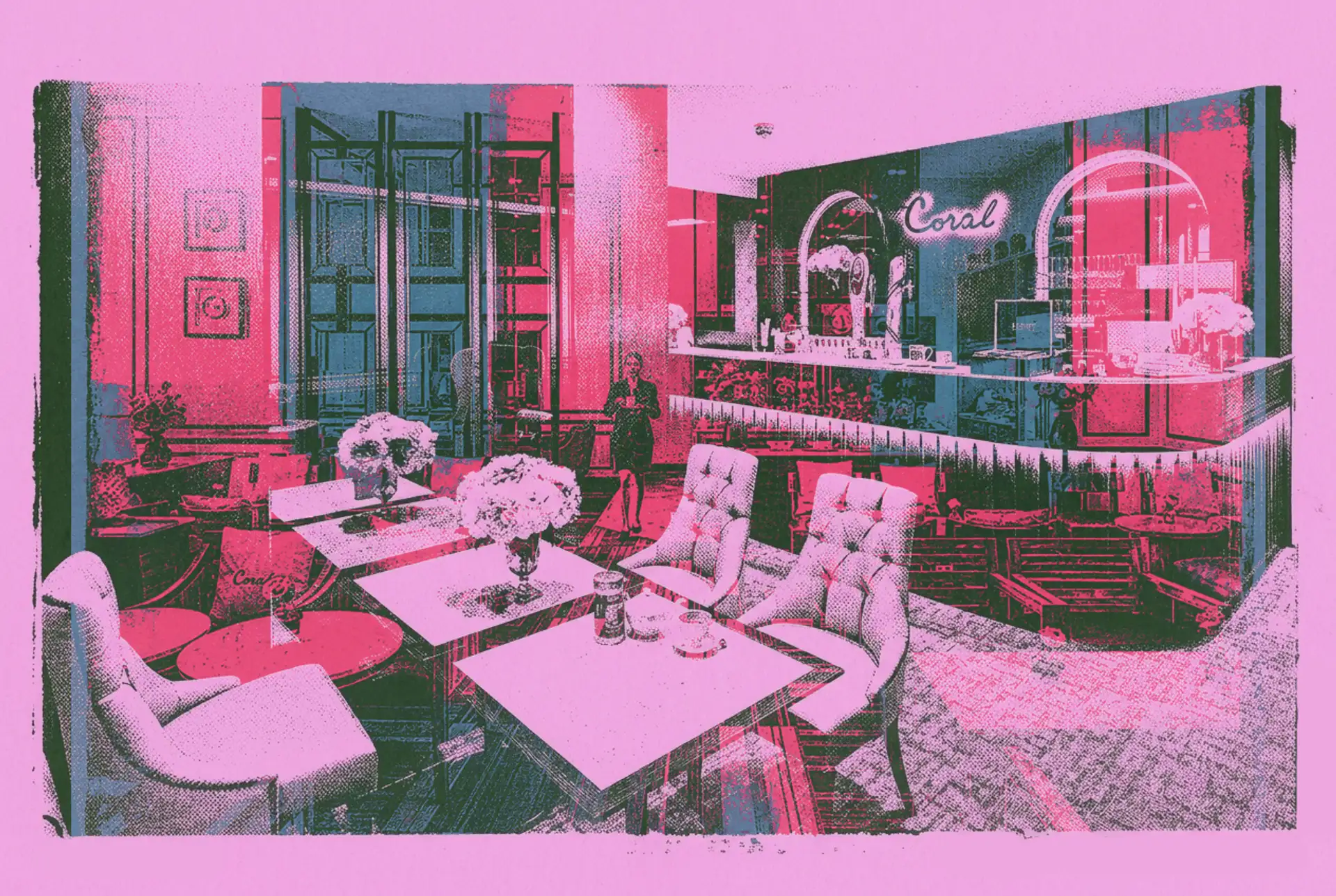
The first time I entered the Coral Lounge in the domestic terminal of Phuket International Airport, I thought it was a restaurant. I asked the front desk to see a menu. Sorry, sir, but this is a private lounge.
I made an about face and marched back outside, equal parts embarrassed and intrigued. There were heavy curtains on the windows separating the lounge from the terminal, bookended by oversized lampshades issuing gentle, warming light. The decor whispered into my ear that things were better on the inside. I wanted to find out if it was true.
When I sat down at a café across the terminal, I kept one eye on my sandwich and the other on Coral’s doors, biding my time. Next, I fired up the Priority Pass app to see if Coral was on the list of lounges I was granted free access to with my fancy credit card. Thankfully I was in luck.
For those fortunate enough to have never experienced a Priority Pass lounge, let me explain. They are a worldwide collection of stuffy boxes tucked away in airport corners with inedible food and exploited staff. Some are passable but most let you down. There is a through line of disappointment that patrons overlook for the chance at a free snack and space to rest their eyes before a flight, sheltered from the airport’s cacophony.
While I do appreciate the peace and quiet inside Priority Pass lounges, I enjoy listening to the sounds of travelers more: Where they’re going and where they’ve come from. What business deal they’re rehearsing or vacations they’re planning. More often than not, what animates my time in these liminal spaces is witnessing travelers’ faces contort when their expectations aren’t met. When what they think they are owed from life—in this place specifically—inevitably falls short to dramatic effect. Or at the other end of the spectrum—and this is even more enjoyable—when they’re so happy to have gained access to this patina of status they eat up the buffet like their life depends on it.
Does the latter traveler ever become the former? Will the striver one day rise up to be the incumbent? The entire engine of capitalism runs on this illusion. Because why toil without hope?
Although it seems there are two camps inside Priority Pass lounges, everyone shares one common belief: That paying an annual fee of $795+ for an Amex Platinum or a Chase Sapphire Reserve card is worth it. Doing so signals that meritocracy is alive. That we made it inside owing to our hard work, not any headstart. That we belong there. And how can the system be rigged if the card pays for itself?
Before entering Coral, I wondered what I would find. Would it recreate America’s class anxieties with local flavor? I hoped not. I was on vacation, trying to shake off America’s social malaise. And yet here I was, making a beeline into the reefs of the Coral.
Upon arrival, Coral announced its seaside motif with an onslaught of blues and creams, bamboo patio furniture, maybe even a conch if you looked hard enough. This is what the Nantucket airport on the 90s sitcom Wings should have looked like. I half expected Tony Shalhoub to pop out from behind a fern and ask if I needed a taxi.
I listened for complaints about the lack of oat milk but all I could hear was ambient Russian.
In one corner was a toned twenty-something with a heavy silver chain around his neck, and reddish-brown chiseled beard that resembled the tip of an iceberg. He was bowed in exhaustion as Russian TikTok videos played loudly from his phone. Every few minutes his head would pop up, look down at a video, and then collapse again on the table.
In the other direction was a fair-haired man speaking Russian into his phone. A tank top revealed blistering red shoulders, and he wore white crocs with a yellow happy face charm latched onto the right foot. Was he complaining about the Coral amenities? Or was he effortlessly happy like his Crocs suggested, glowing from a fortnight of tropical renewal? I thought about the clothing brand Life is Good and wondered why they had never expanded into Russia during the post-communism gold rush.
Uncle Klaus hadn’t prepared me for all the Russians. The first instance came just two days prior, leaving one of Phuket’s many turquoise beaches after my snorkeling attempt was cut short by sea lice. Klaus was waiting for me across the street in the shade, drinking a large Leo beer out of a mug with ice cubes.
While everyone here was escaping different circumstances—some walking, some likely sprinting—I had this palpable feeling that they had figured it out.
In front of Klaus was a plate of dumplings swimming in clumpy sour cream. He had decided to order from the Russian menu on a whim. Try some pelmeni, he said, pointing to his plate. Klaus’ mother accidentally chopped off his right index finger when he was a child, so he pointed with his middle one. It nearly harpooned one of the dumplings.
Moments later, two steaming bowls of borsch came darting out of the kitchen for a couple next to us. We were surrounded by Russians. I couldn’t see them through the clouds of cigarette smoke but I could hear them: A mixture of holiday makers, retirees and families waiting out the Russia-Ukraine war. This latter group was threatening the peaceful coexistence between long-term residents (like Klaus) and Thai nationals. Russian émigrés had ballooned to 30,000 on the island, driving up real estate prices and time spent sitting in traffic.
As Klaus ordered us another round of Leos, I looked down at a flier on the table promoting a Muay Thai boxing night. There were a bunch of local tough guys pictured, but also a lineup of fighters from faraway lands: Northern England, Albania, even a former Marine. Some you could search by their fighter names on social media; others chose to remain unknowable.
Their pictures glowed with tattooed muscles, mischievous smirks and a keen readiness to fight.
I wondered why they ended up here: Were they waiting out a war? Escaping a failed marriage? Running from debt collectors? Or did a system that promised ascension back home fail to deliver?
Although Klaus wasn’t much of a boxer, he always knew when to leave one place for another. At 23, he fled the poor conditions of post-war Germany for Australia with $70 in his pocket and just a few words of English. From Australia, he went up to Papua New Guinea where he worked on and off for almost two decades, with interludes in Barbados, Miami and New York—where he managed his friend’s bustling soul food restaurant on the Upper West Side.
With his charming, lifelong partner Wendy by his side, Klaus retired in Phuket. They wanted fresh air, new adventures. Oxygen and energy to help the final chapters jump off the pages.
The previous week in Chiang Mai, an imperial city in Northern Thailand, I came across another group who were seeking a fresh start. They were friends playing a benefit concert for one member in financial need. They ranged from mid-30s to mid-50s, all having relocated to Chiang Mai as adults, and seemed deeply content. They were in the process of integrating into their new community, no longer climbing the rungs of an endlessly competitive ladder.
While everyone here was escaping different circumstances—some walking, some likely sprinting—I had this palpable feeling that they had figured it out. This was a place with affordable and accessible healthcare, where you could own a home or rent one for very cheap. Their lyrical communion reflected other ways to live.
Back in the States, most people I know felt politically helpless. Resistance often took the form of wordplay. Writing “ICE” below stop signs. Or “Free Palestine” with sharpie on porcelain toilets in café bathrooms. But here was a group that showed up for one another outside of putting signs in windows. The musicians sang about what is wrong with the current world order, and condemned regimes who only practice open borders when it applies to citizens from wealthy nations. Their lyrics strung together the hypocrisy of our language, in how labels emigrant, refugee, and expatriate are used to divide us based on race, class, and perceived permanence, rather than fact or reality.
Their voices told stories of independence, how no one is free until we all are free. Their song, their dance, their glee, their sense of possibility, their shared humanity.
Back inside of the Coral, I started to enjoy how little this place resembled my lounge visits elsewhere. Maybe it was because there were no Americans in sight. I could continue to guess what the Russians were thinking, but we know that’s a fool’s errand, an enigma wrapped inside an oyster cracker. The few business travelers mostly kept to themselves, reading salmon-colored newspapers or gently scrolling on their phones.
Looking over my shoulder, I could have sworn one of the boxers was sitting next to me. He resembled Manchester Charlie. I remembered Charlie because he looked more innocent than the others and I had spent 15 minutes searching in vain online to figure out why. Was it because he never killed anyone on the battlefield? I wondered where he was headed. Perhaps onto the next fight.
We were all in this space temporarily, like trucks passing through a weigh station, each with different types of cargo. Perhaps the greatest gift Coral could give us was to help forget how impermanent life is.
My stomach started to grumble again and so I went over to survey the food. I was quickly reminded that even though this place was different, it was still a Priority Pass lounge: Stale white-bread sandwiches cut into miniature triangles, dehydrated croissants, powdered eggs, and a simmering noodle dish screaming to be put out of its misery. Fortunately, the coffee machine squeezed out a reliable latte into a beautiful blue and white ceramic cup that briefly transported you to China, via Nantucket, via Phuket.
As I got up to leave, in walked another American. He was in his mid-20s, wearing a lime green tank top and a backwards camo San Diego Padres hat. He was piling his plate so high with food it looked like he would never have to eat again. On his index finger, a matte black Oura ring. Performative wellness wearables to signal ascent, I thought. Dubious sleep tracking calibrating productivity. It was happening again. I was being transported back into America’s class calculus.
Refusing to give into this mental trap, I jetted out through Coral’s gates and into the terminal. Looking up at the departure screen, I considered all the possible destinations. Maybe I wasn’t ready to go home just yet.
Related Articles


I groaned and pried myself out of bed. “Alexa, play The Life of a Showgirl on Spotify.”